Most buyers looking for a cordless power tool manufacturer in China are not short of options. They are short of a way to tell the options apart. The decision usually turns on five things: whether the factory actually builds the tools, whether its battery platform can carry a whole range rather than one drill, what documentation it can produce for your market, what it takes to put your own brand on the product, and how the supplier behaves after the first order ships. This guide works through those five in the order a purchasing manager would check them, and ends with the questions worth asking before you pay for samples.
The short version
Pick the manufacturer whose battery platform fits the range you want to be selling in three years, not the one with the cheapest drill this quarter. Then confirm four things before samples: that they assemble the tools and battery packs themselves, which certification documents exist for the exact models you are asking about, what the private-label minimum order is, and whether UN38.3 paperwork is available for the complete battery pack rather than just the cells. A supplier who answers those four questions plainly is usually worth a factory visit. One who answers them vaguely usually is not.
Manufacturer or trading company?

A lot of “factories” on sourcing platforms are trading companies with a good photographer. That is not always a problem, but it changes what you can ask for. A manufacturer can change a housing colour, move a label or swap a battery configuration because those are its own processes; a trading company has to go back to whoever really makes the tool, and every request adds margin and delay.
Three ways to tell them apart:
- Ask which processes are done in-house. Few power tool factories make their own cells or mould every plastic part. What matters is whether tool assembly, battery pack assembly, function testing and final packing happen under one roof.
- Ask for a live video call from the production line for the model you are discussing, not a pre-recorded tour.
- Ask for the registered company name and address, and check that export paperwork will carry the same name. Some factories trade through a separate export entity; that is normal, but it should be explained, not discovered later.
Start with the battery platform, not the tool
This is the point most first-time importers get backwards. They compare drills. Their customers, once they own a drill, compare batteries.
A platform is the voltage class, cell format and pack design a family of tools shares. A contractor with two packs and a charger buys the next tool that takes those packs. For a distributor, the platform therefore decides how many battery and charger SKUs you hold, how easily you add tools later, and whether a customer stays with your brand. Manufacturers in this segment typically run three or four:
| Platform | Typical cell format | Typical role in a range | What to check |
|---|---|---|---|
| Compact (around 16V) | 18650 | Light drills and drivers, entry price points | Whether it shares anything with the main platform (usually it does not) |
| Main (marketed as 20V or 21V) | 18650 or 21700 | Drills, impact drivers, impact wrenches, grinders, saws | Which pack design each tool actually takes |
| High-power (around 40V) | 21700 | Chainsaws, blowers, trimmers, larger saws | Charger compatibility and shipping classification for the larger packs |
Specifications vary by model and configuration, and two points on the table deserve care.
“20V” and “21V” are marketing labels, not a promise of compatibility. Both describe a five-cell lithium pack; the difference is usually whether nominal or peak voltage is quoted. A “20V” tool on 21700 cells and a “21V” tool on 18650 cells from the same factory may use different pack housings and contacts, and the packs will not interchange. Ask for a compatibility table by model.
18650 and 21700 cells behave differently in the tool. The larger 21700 cell generally supports higher continuous discharge and more capacity per cell, so a 21700-based platform can usually stretch further into heavy-duty tools without a second voltage class. Confirm the actual discharge rating of any pack with the manufacturer rather than inferring it from the cell type.
Certification: which document, for which part, for which market
Buyers often ask “is it CE certified?” and accept a yes. That question is too broad to be useful. A cordless tool shipment involves four separate compliance questions, answered by different documents.
| What is being certified | Typical documents | Who needs it |
|---|---|---|
| The tool itself | CE (machinery and low-voltage directives), EMC test reports, EAC for the Eurasian market | Importer of record, customs |
| The charger | Separate safety and EMC testing, because it is a mains-powered device | Importer, retailer |
| The lithium battery pack, for transport | UN38.3 test summary for the complete pack, safety data sheet | Freight forwarder, airline or shipping line |
| Destination-market rules | UKCA for Great Britain, FCC for the United States, and others by market | Importer, depends on where you sell |
Three things follow:
- A certificate belongs to a specific model, pack and charger combination. A factory that “has CE” may have it for some models and not others. Ask for the certificate that names the configuration you intend to order.
- Battery transport documentation is not optional. Without a UN38.3 summary for the assembled pack, a forwarder can refuse the cargo. Ask for it before you plan a shipping schedule.
- Destination-market requirements are the importer’s to confirm. A manufacturer can supply test reports and help with technical files, but the rules in your market are yours to meet; check them with your own compliance adviser.
Private label: what OEM covers, and what it commits you to
For most distributors, the goal is not to buy a generic drill but to sell their own brand. “OEM” covers a range of options, and it helps to separate them:
- Branding on the product — logo on the tool housing, on the battery pack and on the charger
- Product colour — housing and pack colour matched to your brand
- Packaging — colour box, blow-moulded case or plain carton with your artwork
- Documentation — manuals, warranty cards and rating labels in your language and with your details
- Configuration — which batteries, charger and accessories go in the box
Each of these has a set-up cost for the factory — colour runs, printing plates, packaging print runs, artwork approval — which is why genuine private label almost always carries a minimum per model or configuration. In this segment, 300 units per model is a common threshold. Below that, factories generally offer the tool in their own brand and packaging, a sensible way to test a market before committing to customised stock.
Expect an artwork approval stage before production is scheduled, and build it into your launch calendar; it is the step most often left out. Fengbao’s private-label power tool manufacturing page lists what can be changed and the order conditions that apply.
Quality: judge the process, not the sample

Every factory sends a good sample. The question is what happens to unit four hundred.
Ask the manufacturer to describe its checks in sequence: incoming inspection of motors and packs, a function check during assembly, a full function test on every finished unit, a battery-and-charger pairing check before kitting, and a final packing check against the order. Ask whether these run on every unit or by sampling, and ask for pre-shipment photos of your packed cartons as a standard step rather than a favour.
Two things buyers forget until the first warranty claim: which spare parts can be ordered separately (switches, chucks, motor assemblies, packs and chargers, so your service partner can repair rather than replace), and what the manufacturer treats as a warranty defect. Agree the second in writing before the first order; it decides whether after-sales support is workable or theoretical. Fengbao’s quality control page lists its own inspection points and is a usable template for the questions to put to any factory.
What this means for distributors and importers
Translated into purchasing decisions:
Inventory. One platform across drills, grinders, saws and outdoor tools means one set of packs and one charger family in the warehouse. Two platforms doubles that overhead before you have sold a unit.
Positioning. Brushless motors, 21700 cells and metal gearboxes put a tool in the trade bracket; brushed motors and smaller packs put it in DIY. Decide which shelf you are aiming at and choose the platform to match, rather than letting the factory’s price list decide.
Performance claims. Treat every torque and runtime figure on a product sheet as a claim to test, not a fact. Run the sample against a benchmark tool your customers already know.
Certification cost. Testing for a new market costs real money and weeks. Weigh a supplier who already holds the reports for your market against one who does not.
Future expansion. Ask what is planned for the platform. A manufacturer adding tools to the same pack design is one you can grow with; one that launches a new voltage every year leaves your customers with stranded batteries.
Questions to ask the manufacturer
- Which processes — tool assembly, pack assembly, testing, packing — are done in your own facility?
- Which packs does this exact model accept, which other tools share them, and what continuous discharge are they rated for?
- Which certificates exist for this specific model, its pack and its charger, and can you send them?
- Is a UN38.3 test summary available for the complete assembled pack?
- What is the private-label minimum per model and configuration, and what can be ordered below it?
- Which spare parts can be purchased separately, and how are warranty defects defined?
- What are the QC points between assembly and shipment, and are pre-shipment photos standard?
How Fengbao approaches this
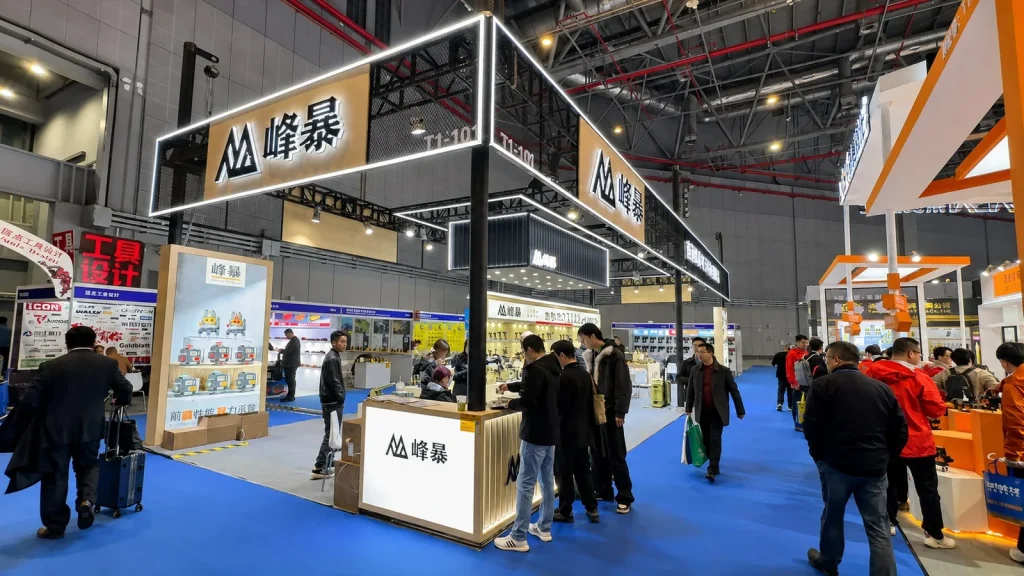
Fengbao has built cordless tools in Nantong, Jiangsu since 2001. Tool assembly, battery pack building, kitting and packing happen in the company’s own plant, which is what lets housing colours, printed packaging and branded packs be handled without an intermediary.
The range sits on four platforms — a compact 16V line, the main 20V and 21V lines, and a 40V line for outdoor and higher-draw tools — and the standard advice to a new distributor is to evaluate one platform as a whole rather than one tool from it. Compatibility is confirmed model by model, because the 20V 21700 packs and the 21V 18650 packs are different designs and do not interchange.
Private-label orders start from 300 units per model or configuration. Samples are supplied for a fee credited against a subsequent order, and smaller evaluation quantities ship under the Fengbao or Kayleo brand. CE, EMC, EAC and UN38.3 documentation is available; which documents apply depends on the model, pack, charger and destination market, and the factory confirms that against the configuration being quoted.
The manufacturing page sets out how an order runs from specification to shipment; the cordless drill range shows the platforms in practice.
FAQ
Can I order fewer than 300 units to test a market? Usually yes, but not with your own branding. Below the private-label minimum, most manufacturers, Fengbao included, supply the tool in their own brand and packaging so you can trial it first.
Can I mix several models in one private-label order? Policies differ. Some factories apply the minimum per model, some per order, and mixed-model terms are usually confirmed at quotation rather than published. Ask before you plan the assortment.
Are all of a manufacturer’s batteries interchangeable? No. Interchangeability applies within a platform, and only where the manufacturer specifies it. Voltage labels alone do not guarantee fit; ask for a compatibility table by model.
What documentation should arrive with the first shipment? At minimum: tool and charger test reports for your market, the UN38.3 summary and safety data sheet for the packs, and a packing list matching the order. Confirm the full list with your forwarder and compliance adviser.
How do I check that a factory is real before I travel? Ask for the registered name and address, request a live video call from the line, and ask which processes are in-house. A third-party audit before a first private-label order is normal, and established manufacturers expect it.
If you are putting together a cordless range for distribution or private label, Fengbao can recommend models by battery platform, set out the OEM options for your brand, and quote against your target market. Send the product categories you are interested in, an estimated quantity per model, and the destination country, and the sales team will reply with configurations, order conditions and sample terms. Request a quotation or download the 2026 catalogue first if you would like to see the full range.